High-Torque Geared Reduction Motor
Qianjiang is a motor manufacturer and supplier from China with over a decade of industry experience. The company offers high-torque geared reduction motors featuring precision gear grinding technology; these motors are ideally suited for heavy-load applications, delivering more stable output and superior impact resistance.
Send Inquiry
Product Description
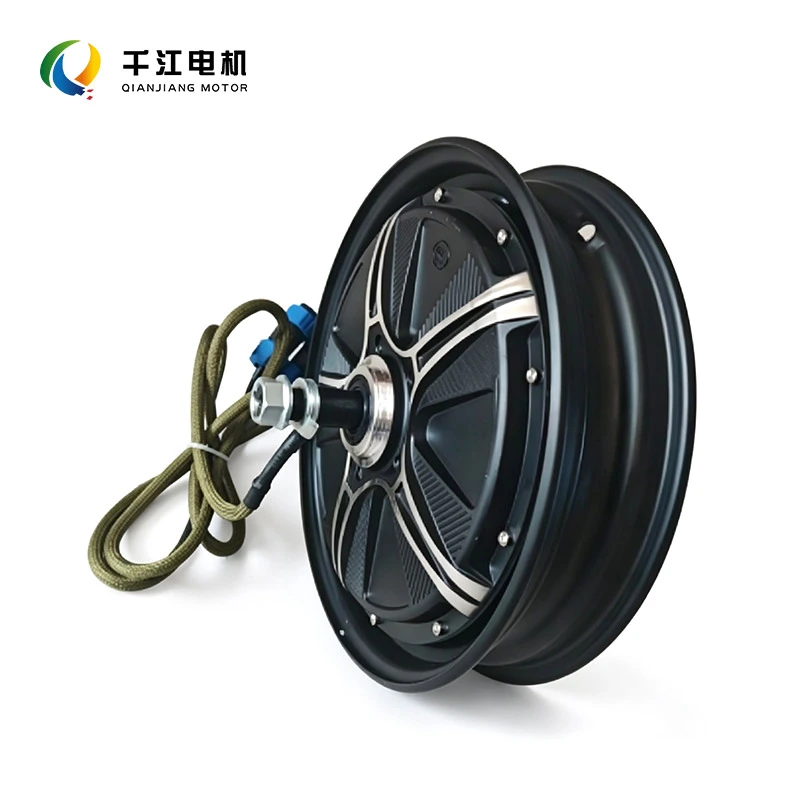
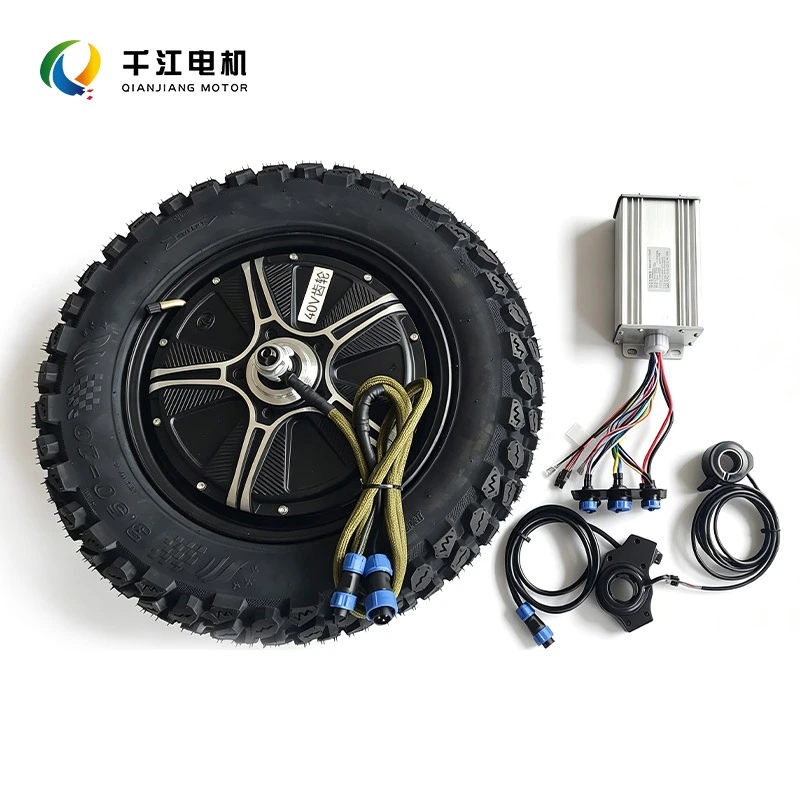
This high-torque geared reduction motor is specially designed for heavy-load transportation, mountainous roads, construction sites, agricultural applications, and upgrading older electric vehicles.
Unlike conventional direct-drive motors, which can struggle under heavy loads and steep slopes, this motor uses a precision gear reduction system to increase output torque and provide stable power at low speeds.
It is an ideal power solution for heavy-duty transportation, commercial vehicles, agricultural equipment, construction-site applications, and low-speed electric vehicles.
Key Advantages
1. Mechanical Gear Reduction
The built-in mechanical gear reduction system significantly increases output torque while maintaining stable low-speed performance.
Compared with conventional direct-drive motors, it provides stronger starting power and better climbing ability under heavy loads. It is particularly suitable for cargo transportation, steep slopes, rough roads, and heavy-duty applications.
2. All-Metal Wear-Resistant Gears
The motor uses high-strength hardened alloy gears with precision-machined tooth surfaces for excellent wear resistance and impact resistance.
The load is distributed across multiple gears, reducing stress on individual gear teeth and helping prevent common problems such as gear damage, tooth breakage, and jamming.
The reinforced gear system is designed to withstand frequent starts and stops, heavy loads, rough roads, and continuous hill climbing.
3. Stable Low-Speed Performance
Direct-drive motors may require high current and high motor load to produce sufficient torque during heavy-duty operation, which can result in excessive heat.
This geared motor uses mechanical gear reduction to multiply torque, allowing the motor to deliver strong output without continuously operating under extreme load conditions.
This helps reduce motor temperature and the risk of overheating during long periods of heavy-load operation, making it more suitable for continuous climbing, cargo transportation, and other demanding applications.
4. High Transmission Efficiency
The precision gear system is designed for efficient power transmission, with a claimed transmission efficiency of up to 95%.
Lower transmission losses help reduce unnecessary energy consumption and heat generation. This allows the vehicle to maintain stable performance while improving energy efficiency under heavy-load conditions.
5. Smooth and Quiet Power Transmission
Precision-machined gears provide smooth and consistent engagement. Combined with long-lasting noise-reducing grease, the gear system operates with low vibration and reduced mechanical noise.
Power delivery is smooth and progressive, helping prevent sudden acceleration or jerky movement.
The motor is suitable for both heavy-duty agricultural and construction applications as well as everyday transportation and short-distance commercial use.
6. Reinforced Sealed Housing
The motor uses a reinforced die-cast aluminum alloy housing with multiple sealing layers and a fully enclosed gear chamber.
The sealed design helps protect the motor and gears from rain, dust, mud, and other outdoor contaminants, reducing the risk of gear corrosion and moisture-related electrical problems.
It is suitable for demanding outdoor environments such as construction sites, agricultural fields, muddy roads, and rainy conditions.
7. Versatile Low- and High-Speed Performance
The motor combines high torque at low speeds with smooth operation at higher speeds.
At low speeds, the high-torque output is ideal for climbing, carrying heavy loads, and recovering from difficult terrain. At higher speeds, the motor provides smooth and stable power for normal road travel.
This makes it suitable for a wide range of applications, including personal transportation, cargo transportation, construction work, agricultural operations, and mountainous commuting.
8. Easy Installation and Customization
The motor is compatible with many electric three-wheelers and low-speed four-wheel electric vehicles.
Standard axle dimensions, mounting widths, and mounting holes allow it to replace many existing motors without major frame modifications.
Available options include 48V and 60V configurations, multiple power ratings, drum or disc brakes, customized axle lengths, and customized cable lengths.
It is suitable for DIY modifications, repair shops, vehicle manufacturers, and OEM applications.
Product Specifications
| Parameter | Details |
| Motor Type | Permanent Magnet Brushless High-Torque Geared Reduction Motor |
| Rated Voltage | 48V / 60V |
| Rated Power | 500W / 800W / 1000W / 1500W / 2000W |
| Transmission Structure | Multi-Stage Alloy Gear Reduction System |
| Transmission Efficiency | ≥95% |
| Brake Type | Drum Brake (Standard) / Disc Brake Available |
| Protection Rating | IP54 — Splash, Dust, and Mud Protection |
| Operating Characteristics | Smooth, Low-Noise, Low-Vibration Power Transmission |
| Hall Sensor | Standard 120° 5-Wire Hall Sensor |
| Controller Compatibility | Standard Brushless Square-Wave / Sine-Wave Controllers |
| Applications | Electric Three-Wheelers, Low-Speed Four-Wheel EVs, Mountain Transportation, Agricultural Cargo Vehicles, Heavy-Duty Construction Transport, Older Vehicle Upgrades |
Installation Notes
1. Disconnect the battery before installation. Never connect or disconnect wiring while the system is powered, as this may cause a short circuit and damage the Hall sensors or controller.
2. Connect all wires according to the correct wiring configuration. Incorrect, loose, or reversed connections may cause vibration, failure to start, reverse rotation, or abnormal operation.
3. The motor can replace many existing direct-drive motors without major modifications. In applications with matching voltage and compatible mounting dimensions, the original controller and wiring may be retained. Controller compatibility should be confirmed before installation.
4. Make sure the motor axle is properly centered and level. Tighten the axle nuts evenly and securely to prevent wheel misalignment, uneven tire wear, or abnormal vibration.
5. After installation, perform a low-speed, no-load test. Confirm that there is no abnormal noise, vibration, jamming, or excessive heating before carrying passengers, cargo, or operating on slopes.
6. The motor is designed to withstand normal rain, road splash, and dusty or muddy conditions. Do not submerge the motor in deep water for extended periods or direct a high-pressure water jet at the sealing areas.
7. For vehicles used frequently under heavy loads, regularly inspect the gear housing seals and axle fasteners to help maintain long-term reliability.
FAQ
Q1: What is the difference between a high-torque geared motor and a conventional direct-drive motor?
A: The main difference is the way torque is generated.
Conventional direct-drive motors are generally better suited to light loads and relatively flat roads. Under heavy loads or on steep slopes, they may require higher current, which can increase heat generation and reduce performance.
A high-torque geared reduction motor uses mechanical gear reduction to multiply output torque, making it more suitable for heavy loads, steep slopes, rough roads, construction work, and agricultural transportation.
For mainly flat-road, light-duty applications, a direct-drive motor may be sufficient. For frequent heavy-load or hill-climbing use, a geared motor is generally the better choice.
Q2: Can the geared motor directly replace the original direct-drive motor?
A: In many applications, yes.
If the voltage, power requirements, axle dimensions, mounting dimensions, brake configuration, and controller compatibility match, the motor can be used as a replacement for an existing direct-drive motor.
No major frame modification may be required. However, we recommend confirming the vehicle specifications with our technical team before installation.
Q3: Does the geared motor require regular maintenance or gear oil?
A: The motor is factory-filled with high-temperature, long-life grease and uses sealed gear housing.
For normal household use, no regular lubrication is required. For vehicles used frequently in construction, agricultural, or heavy-load applications, we recommend checking the gear housing and grease condition periodically and servicing it when necessary.
Q4: Is a slight gear noise normal?
A: Yes. A light and consistent gear-meshing sound is normal during operation.
However, loud clicking, grinding, abnormal vibration, or repeated gear-impact sounds may indicate incorrect installation, wheel or axle misalignment, water or dirt contamination, or gear wear.
If abnormal noise occurs, check the mounting alignment and sealing condition and contact technical support if necessary.
Q5: Does a geared motor last longer than a direct-drive motor?
A: Under heavy-load conditions, a properly selected geared motor can provide better durability and more stable performance than a direct-drive motor.
The gear reduction system increases output torque mechanically, reducing the need for the motor to operate continuously under extreme electrical load. This can help control motor temperature and reduce thermal stress during heavy-duty operation.
Actual service life depends on load, operating conditions, maintenance, installation, and controller settings.
Q6: Is the motor resistant to overheating and demagnetization?
A: The geared design helps reduce the motor's operating load during low-speed, high-torque applications, which can help control heat generation.
However, no electric motor is completely immune to overheating or demagnetization. Correct voltage, controller settings, load limits, and operating conditions are important for reliable performance.
For continuous heavy-load or steep-slope applications, we recommend selecting the appropriate motor power and voltage based on the vehicle's total weight, payload, slope, and operating cycle.
Hot Tags: High-Torque Geared Reduction Motor, High Torque Gear Motor, Geared Reduction Motor Manufacturer
Send Inquiry
Please feel free to fill your inquiry in the form below. We will reply you in 24 hours.
Related Products
-
E-mail
X
We use cookies to offer you a better browsing experience, analyze site traffic and personalize content. By using this site, you agree to our use of cookies.
Privacy Policy