
Why Do Hub Motors Balance Range and Riding Comfort So Well?
Every electric bike rider faces the same trade-off: range or comfort. A bike that can travel 100 kilometers on a single charge often feels stiff and unforgiving on rough roads. A bike that absorbs every bump like a luxury sedan often drains its battery in half the distance. This trade-off is not inevitable. It is a consequence of the powertrain architecture. And the powertrain architecture that best balances range and comfort is the Hub Motors. A Hub Motors integrates the electric motor directly into the wheel hub, eliminating the need for chains, belts, and complex transmissions. This direct-drive configuration has profound implications for both efficiency and ride quality. It reduces mechanical losses, enabling longer range. It frees up the frame for suspension and comfort features. And it enables regenerative braking, which recovers energy that would otherwise be lost as heat. For riders who want both distance and comfort, Hub Motors offer a compelling solution.
The question of why Hub Motors balance range and riding comfort so well is a question of system design. It is about how the motor, the battery, the controller, and the frame interact. It is about the efficiency of direct drive versus geared drive. It is about the effect of unsprung weight on suspension performance. And it is about the ability of the controller to smooth out the power delivery. This article will examine these factors in detail. We will cover the different types of Hub Motors, the efficiency characteristics that extend range, the comfort features that are enabled by the hub motor architecture, and the design considerations that determine the riding experience. We will also provide detailed specifications for our Hub Motors from our factory at Ningbo Qianjiang Motor Co., Ltd.
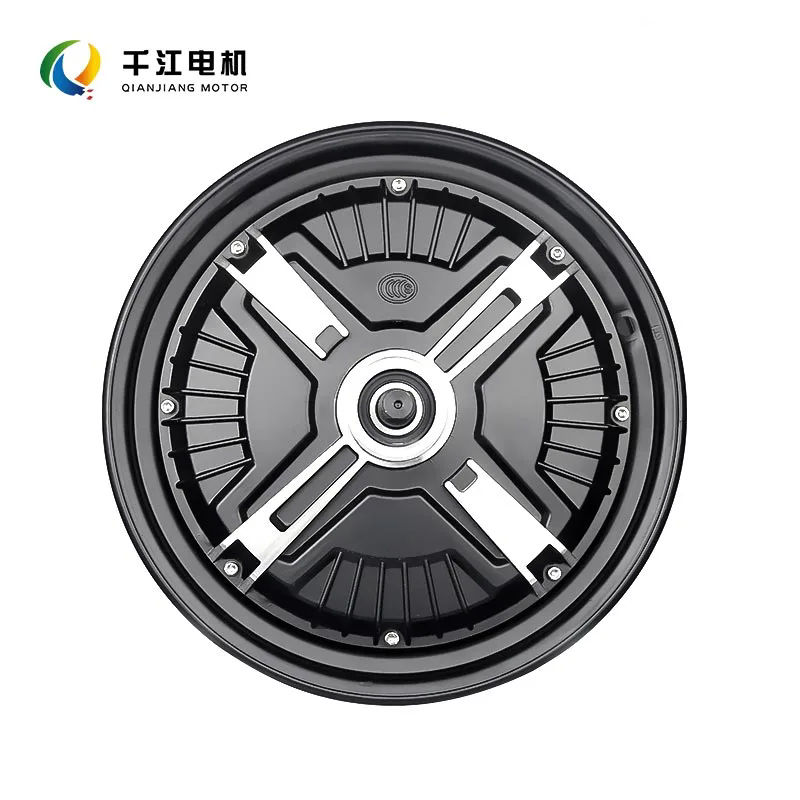
Table of Contents
- 1. What Are Hub Motors and How Do They Work?
- 2. Why Do Hub Motors Improve Energy Efficiency and Range?
- 3. How Does the Hub Motor Architecture Enable Better Comfort?
- 4. What Is the Role of Regenerative Braking in Range and Comfort?
- 5. How Does Unsprung Weight Affect Comfort with Hub Motors?
- 6. What Specifications Define a High-Performance Hub Motor?
- 7. Frequently Asked Questions (FAQ)
- 8. Conclusion
1. What Are Hub Motors and How Do They Work?
A Hub Motors is an electric motor that is integrated into the hub of a wheel. The motor's stator is fixed to the axle, and the rotor is attached to the wheel rim or spokes. When electrical current is applied to the stator windings, a magnetic field is generated, which interacts with the permanent magnets on the rotor, causing the wheel to turn. There are two main types of Hub Motors: direct-drive and geared. In a direct-drive hub motor, the rotor is directly connected to the wheel. The motor rotates at the same speed as the wheel, which is typically 200-400 rpm. In a geared hub motor, a planetary gear set is used to reduce the motor speed and increase the torque. The motor rotates at a higher speed, typically 2,000-4,000 rpm, and the gears reduce the speed to the wheel speed. The table below compares the two types.
| Feature | Direct-Drive Hub Motor | Geared Hub Motor |
| Motor Speed | 200 - 400 rpm | 2,000 - 4,000 rpm |
| Torque | Lower | Higher |
| Efficiency | High at cruising speed | High at low speed |
| Regenerative Braking | Yes | Limited (freewheel) |
| Weight | Heavier | Lighter |
| Noise | Very quiet | Slight gear noise |
| Maintenance | Low | Moderate (gear lubrication) |
At Ningbo Qianjiang Motor Co., Ltd., our factory manufactures both direct-drive and geared Hub Motors for electric bikes, scooters, and other light electric vehicles. We have extensive experience in motor design, controller integration, and system optimization. Our goal is to provide our customers with Hub Motors that deliver the best possible balance of range, comfort, and performance.
2. Why Do Hub Motors Improve Energy Efficiency and Range?
The efficiency of a Hub Motors is one of the key reasons why it balances range and comfort so well. A direct-drive hub motor eliminates the mechanical losses associated with chains, belts, and gearboxes. In a mid-drive system, the motor's power must be transmitted through the chain and the derailleur, which can have an efficiency of 95-98%. In a geared hub motor, the planetary gear set introduces additional losses of 2-5%. A direct-drive hub motor, by contrast, has no mechanical transmission losses. The only losses are the electrical losses in the motor windings and the controller. This means that a higher proportion of the battery's energy is converted into forward motion, extending the range. The table below compares the efficiency of different powertrain architectures.
| Powertrain | Motor Efficiency | Transmission Efficiency | Overall Efficiency |
| Direct-Drive Hub Motor | 85 - 92% | 100% (direct) | 85 - 92% |
| Geared Hub Motor | 80 - 88% | 95 - 98% | 76 - 86% |
| Mid-Drive Motor | 85 - 92% | 95 - 98% | 81 - 90% |
At our factory, we design our direct-drive Hub Motors to maximize efficiency across the entire speed range. We use high-grade electrical steel for the stator laminations, high-energy neodymium magnets for the rotor, and precision winding techniques to minimize copper losses. We also use advanced controllers with field-oriented control (FOC) algorithms to ensure that the motor operates at its peak efficiency point. The result is a Hub Motors that delivers more range per charge than comparable alternatives.
3. How Does the Hub Motor Architecture Enable Better Comfort?
The architecture of a Hub Motors also contributes to riding comfort in several ways. First, it frees up the frame to accommodate suspension systems. In a mid-drive system, the motor occupies the space around the bottom bracket, which can limit the design of the rear suspension. With a Hub Motors, the motor is located in the wheel, leaving the frame free for a suspension linkage, a larger tire, or a more compliant frame design. Second, the Hub Motors eliminates the drivetrain, which reduces noise and vibration. There is no chain to slap against the frame, no derailleur to rattle, and no gears to whine. The ride is quieter and smoother, which enhances the perception of comfort. Third, the Hub Motors allows for a more natural pedaling feel. In a mid-drive system, the motor's power is transmitted through the drivetrain, which can create a surge or lag in the power delivery. With a Hub Motors, the power is delivered directly to the wheel, providing a smooth, seamless assist. The table below summarizes the comfort advantages of the Hub Motors architecture.
| Comfort Factor | Hub Motor Advantage |
| Frame Design Freedom | Allows for suspension, larger tires, and compliant frames |
| Noise and Vibration | Eliminates chain slap and derailleur rattle |
| Power Delivery | Smooth, seamless assist without drivetrain surge |
| Pedaling Feel | Independent of motor, allowing natural cadence |
| Maintenance | No chain or gear maintenance, reducing downtime |
At Ningbo Qianjiang Motor Co., Ltd., our factory designs our Hub Motors to be as smooth and quiet as possible. We use high-quality bearings, precision-machined rotors, and advanced controllers to minimize noise and vibration. We also work with frame designers to optimize the integration of the Hub Motors with the suspension system, ensuring that the ride is as comfortable as possible.
4. What Is the Role of Regenerative Braking in Range and Comfort?
Regenerative braking is a feature that is unique to direct-drive Hub Motors. When the rider applies the brakes or releases the throttle, the motor acts as a generator, converting the kinetic energy of the moving bike into electrical energy, which is stored in the battery. This recovers energy that would otherwise be lost as heat in the brake pads. The recovered energy extends the range of the bike, particularly in stop-and-go traffic or hilly terrain. Regenerative braking also provides a smooth, progressive braking force that can be modulated by the controller. This reduces the wear on the mechanical brakes and provides a more controlled braking experience. The table below summarizes the benefits of regenerative braking.
| Benefit | Description | Impact on Range and Comfort |
| Energy Recovery | Converts kinetic energy back to battery | Extends range by 5-15% |
| Brake Wear Reduction | Reduces use of mechanical brakes | Lower maintenance cost |
| Smooth Braking | Progressive braking force | Improved control and comfort |
| Hill Descent Control | Limits speed on descents | Enhanced safety and comfort |
At our factory, we integrate regenerative braking into our direct-drive Hub Motors. Our controllers are programmed to provide a smooth, progressive braking force that feels natural to the rider. We also offer adjustable regeneration levels, allowing the rider to choose how much energy is recovered and how much braking force is applied. This flexibility enhances both range and comfort.
5. How Does Unsprung Weight Affect Comfort with Hub Motors?
One of the challenges of the Hub Motors is unsprung weight. Unsprung weight is the mass of the components that are not supported by the suspension, such as the wheels, tires, brakes, and hub motor. A heavier unsprung weight can reduce the suspension's ability to absorb bumps, leading to a harsher ride. This is a trade-off that must be managed in the design of a Hub Motors. The motor's weight is located in the hub, which increases the unsprung weight. To mitigate this, engineers use lightweight materials, such as aluminum and magnesium, for the motor housing and the wheel. They also design the suspension to handle the additional weight, using stiffer springs and more sophisticated damping. The table below summarizes the effect of unsprung weight on comfort.
| Factor | Effect on Comfort | Mitigation Strategy |
| Increased Unsprung Weight | Reduced suspension response | Lightweight materials, optimized suspension |
| Wheel Inertia | Slower acceleration, more effort to turn | Lightweight rotor, efficient controller |
| Suspension Tuning | Requires stiffer springs and better damping | Custom suspension design |
| Tire Selection | Larger tires can absorb more bumps | Wider, lower-pressure tires |
At Ningbo Qianjiang Motor Co., Ltd., our factory addresses the unsprung weight challenge through careful design. We use lightweight aluminum alloys for our motor housings and precision manufacturing to minimize weight without compromising strength. We also work with suspension designers to ensure that the suspension is tuned for the additional weight of the Hub Motors. The result is a Hub Motors that delivers both range and comfort.
6. What Specifications Define a High-Performance Hub Motor?
The key specifications for a Hub Motors include the rated power, the rated voltage, the rated speed, the torque, the efficiency, and the weight. The table below provides a summary of the typical specifications for our Hub Motors.
| Specification | Options | Notes |
| Rated Power | 250 W - 3,000 W | For different vehicle classes |
| Rated Voltage | 24 V, 36 V, 48 V, 60 V, 72 V | Selected based on system design |
| Rated Speed | 200 - 400 rpm (direct drive) | Matches wheel size |
| Max Torque | 30 - 150 Nm | Depends on motor size |
| Efficiency | 85 - 92% | At cruising speed |
| Weight | 2.5 - 8 kg | Depends on power and materials |
| Regenerative Braking | Yes (direct drive) | Limited on geared motors |
| Controller | FOC, sine wave | For smooth, quiet operation |
At our factory, we manufacture Hub Motors to meet these specifications and more. We can customize the power, voltage, speed, and torque to suit your specific application. Our engineering team can assist with the selection process and provide detailed technical data for your project.
7. Frequently Asked Questions (FAQ)
Question 1: What is the difference between a direct-drive and a geared hub motor?
Answer: A direct-drive Hub Motors has the rotor directly connected to the wheel, so the motor rotates at wheel speed. It is simple, quiet, and enables regenerative braking. A geared hub motor uses a planetary gear set to reduce motor speed and increase torque. It is lighter and provides more torque at low speeds, but it does not support regenerative braking and may produce slight gear noise.
Question 2: Can a hub motor be used on a mid-drive bike?
Answer: No, a Hub Motors is designed to be installed in the wheel hub. It is not compatible with a mid-drive system, which places the motor at the bottom bracket. The two systems are fundamentally different in their architecture and cannot be interchanged.
Question 3: How does regenerative braking affect the range of an electric bike?
Answer: Regenerative braking can extend the range of an electric bike by 5-15%, depending on the terrain and riding style. It is most effective in stop-and-go traffic and on hilly terrain, where the bike is frequently decelerated. On flat terrain with steady speed, the benefit is minimal.
Question 4: What is the typical lifespan of a hub motor?
Answer: The typical lifespan of a Hub Motors is 5-10 years or 10,000-30,000 kilometers, depending on the quality of the motor and the operating conditions. Direct-drive hub motors have no wear-prone gears and can last longer than geared motors. Bearings and hall sensors are the most common components to fail, and they can be replaced.
Question 5: How do I choose the right hub motor for my electric bike?
Answer: To choose the right Hub Motors, consider the power, voltage, speed, and torque requirements of your application. Also consider the wheel size, the weight of the bike and rider, and the desired range and top speed. Our engineering team can help you select the optimal Hub Motors for your specific needs.
8. Conclusion
Hub Motors balance range and riding comfort so well because of their unique architecture. They eliminate mechanical transmission losses, extending range. They free up the frame for suspension and comfort features. They enable regenerative braking, which recovers energy and provides smooth deceleration. And they deliver power directly to the wheel, providing a seamless and quiet riding experience. While unsprung weight is a challenge, it can be managed through careful design and material selection. At Ningbo Qianjiang Motor Co., Ltd., our factory has the expertise and the experience to design and manufacture Hub Motors that deliver the best possible balance of range, comfort, and performance. We use high-quality materials, precision manufacturing, and advanced control algorithms to ensure that our Hub Motors meet the most demanding requirements.
Our commitment to quality and customer satisfaction has made us a trusted partner for electric bike and scooter manufacturers around the world. We invite you to contact us to discuss your Hub Motors requirements. We can provide samples, technical data, and design assistance. Let us help you build a better electric vehicle.
Contact Ningbo Qianjiang Motor Co., Ltd. today to discuss your Hub Motors requirements and discover how our motors can improve the range and comfort of your electric vehicles.
Send Inquiry

X
We use cookies to offer you a better browsing experience, analyze site traffic and personalize content. By using this site, you agree to our use of cookies.
Privacy Policy