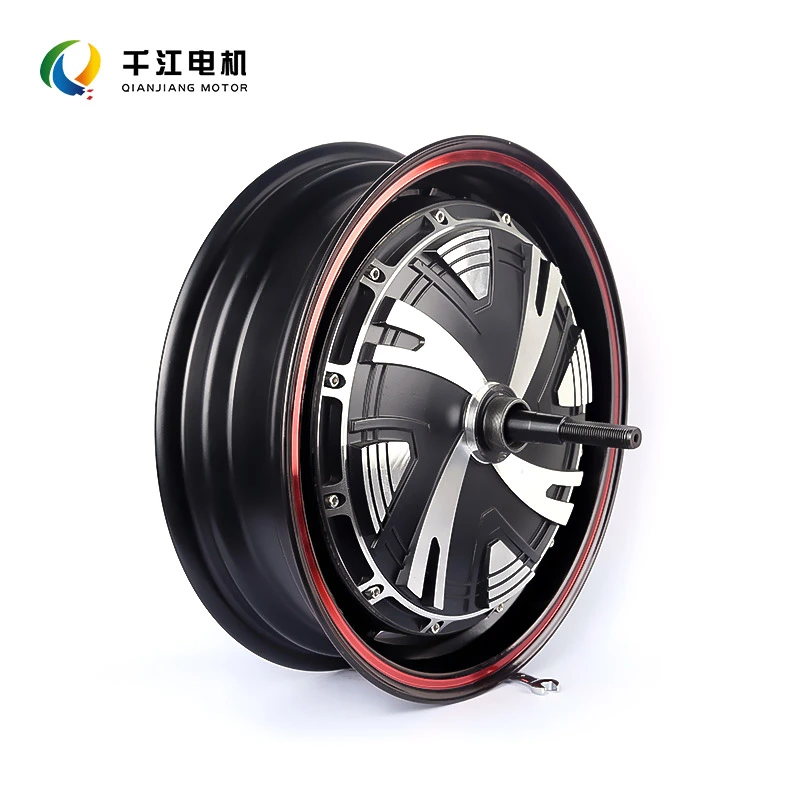
Hub motors integrate an electric motor directly into a vehicle's wheel hub, creating a compact drive solution for electric bicycles, scooters, light electric vehicles, robotics, mobility equipment, and other electrically powered platforms. Their simplified drivetrain architecture can reduce mechanical complexity while providing direct and responsive wheel torque.
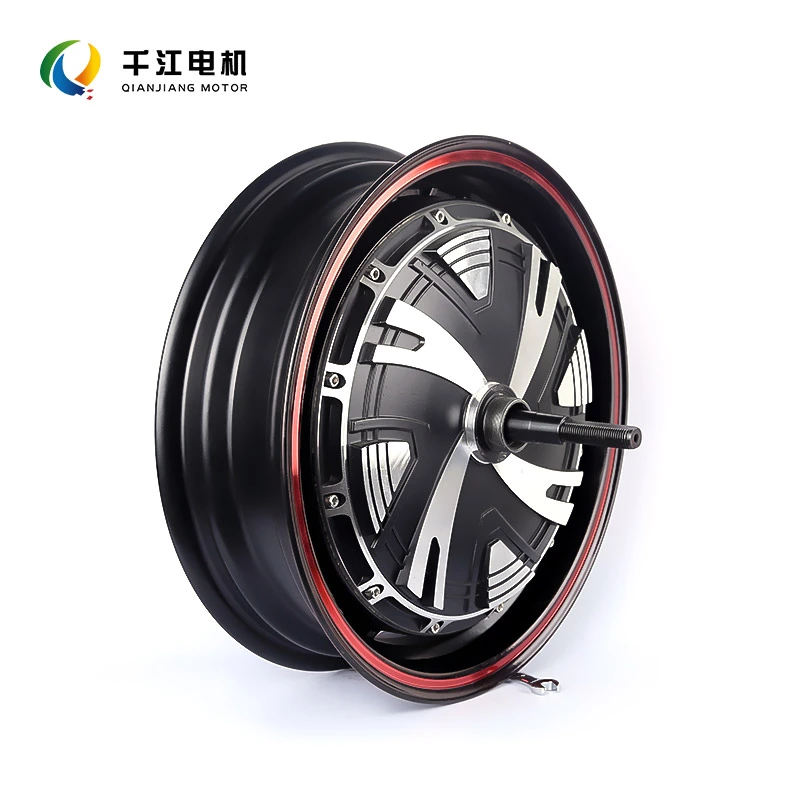
Hub motors place the motor at the wheel, allowing electrical energy to be converted into wheel rotation without relying on a conventional chain, belt, driveshaft, or external transmission in many configurations. They are available in geared and direct-drive designs, with different advantages in torque, weight, efficiency, noise, maintenance, and application flexibility. Understanding motor architecture, rated power, torque, voltage, wheel size, thermal performance, controller compatibility, and environmental requirements is essential when selecting a hub motor. For manufacturers and system integrators, customization and reliable supplier support are equally important for achieving stable long-term performance.
Article Outline
This guide starts with the fundamentals of hub motor construction and operation, then explains the major motor configurations and their practical differences. It continues with performance advantages, limitations, application scenarios, key specifications, customization considerations, reliability factors, and manufacturer selection criteria. The final FAQ section addresses common questions from engineers, purchasing teams, OEMs, and electric mobility product developers.
What Are Hub Motors?
Hub motors are electric motors integrated directly into the hub of a wheel. Instead of positioning the motor in a central frame and transferring power through a chain, belt, shaft, or other mechanical transmission system, the motor is installed close to the point where torque is delivered.
In a typical brushless hub motor, the stator remains stationary with the axle while the rotor rotates around it. Permanent magnets and electromagnetic fields interact to generate rotational torque. Depending on the design, the rotor can drive the wheel directly or transmit power through a compact internal reduction gear.
This architecture makes hub motors particularly attractive for applications where manufacturers need compact packaging, simplified mechanical construction, responsive torque delivery, and reduced dependence on external drivetrain components.
Key point: A hub motor is not simply a conventional motor placed near a wheel. Its structure is designed around the wheel itself, which changes the way the vehicle manages torque, packaging, heat, weight, and maintenance.
How Do Hub Motors Work?
The operating process begins when electrical power from a battery or power supply reaches the motor controller. The controller regulates current supplied to the motor windings according to the required speed, torque, and operating conditions.
-
Electrical power enters the controller. The controller manages the current supplied to the motor.
-
The controller energizes the stator windings. The switching sequence creates a rotating magnetic field.
-
The magnetic field interacts with permanent magnets. This interaction generates electromagnetic torque.
-
The rotor rotates. Depending on the architecture, the rotor either directly turns the wheel or passes torque through internal gearing.
-
The wheel converts torque into vehicle movement. Because the motor is integrated into the wheel assembly, the power path is relatively short.
Position sensors, Hall sensors, sensorless control algorithms, temperature monitoring, and controller feedback can be incorporated to improve speed regulation, torque response, efficiency, and protection.
What Components Make Up a Hub Motor?
Although hub motors differ considerably in construction, most systems contain several fundamental components that work together to create controlled wheel rotation.
|
Component
|
Primary Function
|
Why It Matters
|
|
Stator
|
Contains motor windings and remains stationary
|
Creates the electromagnetic field
|
|
Rotor
|
Rotates around the stator
|
Converts electromagnetic force into rotation
|
|
Permanent Magnets
|
Interact with the stator's magnetic field
|
Contribute to torque generation
|
|
Axle
|
Supports the stationary motor structure
|
Provides mechanical mounting strength
|
|
Bearings
|
Support smooth rotor rotation
|
Influence noise, friction, and service life
|
|
Motor Housing
|
Protects internal components
|
Supports mechanical and thermal performance
|
What Types of Hub Motors Are Available?
Geared Hub Motors
Geared hub motors use internal reduction gears between the motor and wheel. The motor can operate at a higher rotational speed while the gearing converts that speed into useful wheel torque. This architecture can provide strong low-speed performance from a relatively compact motor.
Direct-Drive Hub Motors
Direct-drive hub motors eliminate internal reduction gears and connect the motor's rotational output directly to the wheel. Their relatively simple mechanical construction can provide quiet operation and reduce gear-related wear. Direct-drive systems can also support regenerative braking when the motor, controller, battery, and vehicle system are designed for energy recovery.
Front and Rear Hub Motors
Hub motors may be designed for front-wheel or rear-wheel installation depending on vehicle architecture, traction requirements, weight distribution, frame design, and control strategy. The choice affects handling and load distribution, so it should be considered together with the complete vehicle system rather than treated as an isolated motor decision.
Geared
-
Compact construction
-
Strong low-speed torque potential
-
Useful for weight-sensitive mobility products
-
Contains additional mechanical components
Direct Drive
-
No internal reduction gears
-
Quiet mechanical operation
-
Suitable for sustained operation in suitable designs
-
Can support regenerative braking
What Benefits Do Hub Motors Provide?
The main attraction of hub motors is the ability to combine propulsion and wheel integration in a single compact assembly. This can solve several engineering and manufacturing challenges at the same time.
Compact Packaging
Integrating the motor into the wheel can free valuable chassis space for batteries, electronics, cargo, sensors, or other equipment.
Simplified Drivetrain
Many designs eliminate external chains, belts, shafts, or transmission components, reducing mechanical complexity.
Responsive Torque
Electronic motor control allows torque to be adjusted quickly according to speed, load, throttle input, or control-system commands.
Lower Mechanical Maintenance
Brushless and gearless configurations can reduce the number of wear components compared with more complex mechanical transmissions.
What Challenges Should Buyers Consider?
Hub motors are not automatically suitable for every vehicle. Their location inside the wheel creates specific engineering requirements that should be considered during product development.
-
Unsprung mass: Because the motor is part of the wheel assembly, its mass can influence suspension behavior and ride characteristics.
-
Thermal management: Heat generated by copper losses, iron losses, bearings, and other components must be managed effectively, particularly during continuous high-load operation.
-
Wheel size limitations: Motor diameter, axle dimensions, rim size, tire configuration, and available installation space must be matched carefully.
-
Water and dust protection: Outdoor mobility products require appropriate sealing and enclosure design based on their operating environment.
-
Controller compatibility: Voltage, current, sensor configuration, phase wiring, control algorithms, and communication requirements must match the complete drive system.
These considerations do not make hub motors unsuitable. Instead, they demonstrate why motor selection should be based on the complete application rather than rated wattage alone.
Where Are Hub Motors Used?
Hub motors are used across personal mobility, transportation, robotics, industrial equipment, and specialized electric platforms. Their compact architecture makes them particularly useful where installation space is limited.
|
Application
|
Typical Requirement
|
Important Motor Considerations
|
|
Electric Bicycles
|
Smooth acceleration and efficient daily riding
|
Weight, torque, voltage, wheel size
|
|
Electric Scooters
|
Compact propulsion and responsive control
|
Power density, thermal performance, waterproofing
|
|
Robotics
|
Precise wheel-level movement
|
Control response, encoder/sensor compatibility
|
|
AGVs and Mobile Platforms
|
Reliable continuous operation
|
Duty cycle, torque, heat dissipation
|
|
Mobility Equipment
|
Quiet and controlled movement
|
Noise, safety, reliability, control accuracy
|
How Can Manufacturers Select the Right Hub Motor?
Choosing a hub motor should begin with the vehicle's actual operating conditions. A motor that performs well in a lightweight commuter vehicle may not be suitable for a cargo platform, autonomous robot, or high-load industrial application.
-
Define the vehicle weight. Include passengers, cargo, batteries, chassis, and accessories.
-
Calculate the required wheel torque. Consider acceleration, slope, rolling resistance, tire characteristics, and expected payload.
-
Determine the target speed. Motor winding and electrical parameters should correspond to the desired operating range.
-
Confirm wheel dimensions. The motor must fit the selected rim and mechanical structure.
-
Evaluate operating time. Continuous-duty applications require different thermal considerations from short-duration use.
-
Check the electrical system. Battery voltage, controller current, phase configuration, sensors, and communication interfaces must be compatible.
-
Consider environmental conditions. Water, dust, temperature, vibration, and road conditions can influence housing and sealing requirements.
Purchasing tip: Avoid selecting a motor solely because it has a higher wattage rating. Rated power is only one part of the system. Torque curve, efficiency range, thermal performance, controller matching, mechanical dimensions, and duty cycle may be equally important.
Which Specifications Matter Most?
A technical datasheet should provide enough information for engineers to determine whether the motor can meet the requirements of the complete vehicle.
-
Rated voltage: The nominal electrical system voltage the motor is designed around.
-
Rated power: A useful reference for continuous operating capability under defined conditions.
-
Peak power: Indicates short-duration output capability when properly supported by the electrical and thermal system.
-
Rated torque: Helps determine whether the motor can meet continuous load requirements.
-
Peak torque: Important for acceleration, hill climbing, and short-duration high-load operation.
-
Rated speed: Helps match motor characteristics to wheel speed and vehicle requirements.
-
Efficiency: Important for battery consumption, thermal performance, and operating range.
-
Motor dimensions: Includes axle, hub width, diameter, mounting configuration, and wheel compatibility.
-
Protection level: Important for outdoor, wet, dusty, or industrial environments.
-
Sensor configuration: Hall sensors, encoders, or sensorless operation affect controller integration and control accuracy.
Why Does Customization Matter for Hub Motors?
Standard hub motors can satisfy many general-purpose requirements, but OEM projects often have mechanical, electrical, and performance requirements that do not fit an off-the-shelf configuration.
Customization may involve winding specifications, voltage, rated speed, torque characteristics, axle dimensions, mounting structures, wheel compatibility, cable configuration, sensors, connectors, housing design, sealing, or controller matching.
For product manufacturers, customization can also help integrate the motor into a particular chassis without extensive mechanical modification. This is especially valuable when the motor must fit an existing wheel structure or when the final product has strict space, noise, weight, or performance requirements.
Ningbo Qianjiang Motor Co., Ltd. can be considered by OEM and industrial buyers looking for hub motor solutions that need to be aligned with specific application requirements. When evaluating a supplier, buyers should discuss drawings, electrical parameters, operating conditions, sample requirements, testing procedures, production capacity, and quality-control expectations before moving into mass production.
How Can Hub Motor Reliability Be Improved?
Long-term motor reliability depends on more than the motor itself. The controller, battery, wheel assembly, bearings, wiring, installation method, operating environment, and thermal conditions all influence the final system.
-
Use the correct controller parameters and current limits.
-
Keep electrical connectors properly protected against moisture and contamination.
-
Inspect axle mounting and mechanical fasteners regularly.
-
Avoid operating the motor continuously beyond its intended duty cycle.
-
Monitor abnormal temperature increases during heavy-load operation.
-
Use suitable bearings and sealing for the expected environment.
-
Ensure the wheel and motor are installed according to engineering specifications.
-
Investigate unusual vibration, noise, or torque changes before they develop into larger failures.
What Should Buyers Expect From a Hub Motor Manufacturer?
A reliable supplier should provide more than a product catalog. For OEM and B2B applications, technical communication before ordering can significantly reduce compatibility problems during development and production.
Technical Documentation
Clear drawings, specifications, wiring information, performance data, and installation requirements.
Sample Development
Support for prototype testing helps confirm dimensions, torque, speed, control compatibility, and installation requirements.
Quality Control
Consistent production processes and appropriate inspection procedures are essential for repeatable motor performance.
OEM Support
Application-specific engineering communication can help manufacturers integrate the motor into their final product.
For companies developing electric mobility equipment, robotics, or other wheel-driven products, working with an experienced hub motor manufacturer can simplify the transition from initial specification to prototype validation and volume production.
Frequently Asked Questions
Are hub motors suitable for electric bicycles?
Yes. Hub motors are widely used in electric bicycles because they provide a compact drive solution and do not require the motor to be installed around the bicycle's crank area. The appropriate design depends on required speed, torque, vehicle weight, wheel size, terrain, battery voltage, and controller configuration.
What is the difference between a geared and direct-drive hub motor?
A geared hub motor uses internal reduction gearing, while a direct-drive hub motor transfers motor rotation directly to the wheel. Geared designs can provide strong low-speed torque from a compact motor, while direct-drive designs have fewer internal mechanical components and can support regenerative braking when the complete system is designed for it.
Do hub motors require regular maintenance?
Brushless hub motors generally require less routine mechanical maintenance than systems with chains, belts, or multiple external transmission components. However, bearings, electrical connections, mounting hardware, seals, cables, and overall motor condition should still be inspected according to the application's operating environment.
Can hub motors support regenerative braking?
Direct-drive hub motors can be configured to support regenerative braking because the motor can operate as a generator during deceleration. However, energy recovery depends on the motor, controller, battery-management system, vehicle control strategy, and operating conditions. It should therefore be evaluated as a complete system feature rather than assumed from the motor type alone.
Can hub motors be customized for OEM projects?
Yes. Depending on the manufacturer, customization can cover parameters such as voltage, winding, speed, torque, axle dimensions, mounting structure, wheel compatibility, sensors, connectors, cable configuration, housing, and environmental protection.
What information should I provide when requesting a hub motor quotation?
Buyers should provide the target vehicle type, total load, wheel diameter, desired speed, maximum slope, battery voltage, continuous and peak operating requirements, installation dimensions, expected duty cycle, environmental conditions, quantity, and any available mechanical drawings. More complete information allows the manufacturer to recommend a more suitable configuration.
How do I know whether a hub motor is suitable for my application?
Start with the complete operating requirements rather than the motor's wattage alone. Compare torque, speed, voltage, efficiency, dimensions, thermal conditions, duty cycle, environmental protection, controller compatibility, and expected service life with the actual application requirements.
Conclusion
Hub motors have become an important drive technology for electric mobility, robotics, light electric vehicles, and other wheel-driven equipment because they combine motor and wheel functions within a compact architecture. Their direct power delivery, simplified drivetrain structure, and flexible installation possibilities can help manufacturers address practical challenges involving space, maintenance, control, and product integration.
The right hub motor, however, depends on the application. Geared and direct-drive configurations have different characteristics, while factors such as torque, speed, voltage, wheel size, thermal performance, protection, controller compatibility, and operating conditions can strongly affect real-world results.
For OEMs and engineering teams, the most effective development process is to define the complete application first and then work with a qualified motor manufacturer to verify specifications, prototypes, testing requirements, and production consistency. Ningbo Qianjiang Motor Co., Ltd. can support buyers exploring application-specific hub motor solutions and OEM development requirements.
Looking for a hub motor solution for your next electric mobility or OEM project?
Share your required voltage, speed, torque, wheel size, installation dimensions, operating environment, and expected quantity with Ningbo Qianjiang Motor Co., Ltd. for application discussion and technical support. If you need a customized hub motor solution, please contact us to discuss your project requirements.